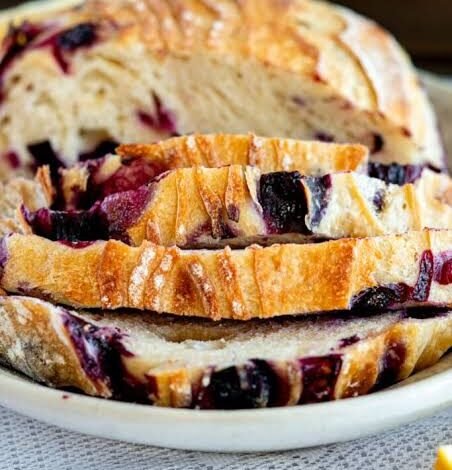
Imagine walking into your kitchen on a quiet weekend morning and being greeted by the sweet and bright aroma of fresh berries mixed with citrus. This beautiful recipe brings together the deep and complex flavors of traditional sourdough bread with the rich and sweet taste of fresh blueberries, zesty lemon, and smooth cream cheese. Sourdough baking is a beautiful art form that has been around for thousands of years, but this modern twist turns a classic loaf into something truly spectacular that feels like a treat from a high end bakery. It is a wonderful way to challenge your baking skills while creating something that your family will talk about for weeks because the combination of wild yeast and sweet fillings is magical. You do not need to be a professional baker to master this recipe because we will guide you through every single part of the process with simple words and clear guidance. By the time your loaf comes out of the oven, you will have a deep appreciation for how simple flour, water, and salt can transform into a beautiful masterpiece filled with fruit and cream.
People absolutely love this bread because it offers a perfect balance of textures and flavors that you cannot find in regular store bought loaves. The crust baked in a hot pot becomes incredibly crispy and golden brown while the inside remains soft, chewy, and beautifully open with air pockets. Every single bite gives you a burst of juicy sweet blueberries that pair beautifully with the bright and sharp tang of fresh lemon zest scattered throughout the dough. The cream cheese adds a rich and velvety layer of smoothness that balances the natural sour flavor of the dough, making it taste almost like a pastry but with the satisfying structure of real artisan bread. It is the kind of food that makes people slow down and truly enjoy their meal because the flavor profile shifts from sweet to tangy to savory in a beautiful dance on your tongue. Neighbors and friends will constantly ask you for the secret to this recipe because it looks incredibly beautiful when sliced open to reveal the bright purple swirls of fruit and white pockets of cream cheese.
Making this bread is a wonderful emotional experience that connects you to the slow and peaceful rhythm of traditional food preparation. In our busy modern world, taking twenty four hours to nurture a sourdough loaf is a form of active meditation that teaches patience and rewards you with incredible flavor. You should make this loaf when you want to celebrate a special occasion like a family brunch, a holiday morning, or a cozy Sunday with the people you love the most. It also serves as a wonderful fitness or health choice for people who love bread but struggle to digest standard commercial loaves made with fast acting baker yeast. The long fermentation process breaks down the gluten and phytic acid in the wheat, which makes this artisan bread much gentler on your stomach and easier to digest. Whether you are baking to comfort your soul after a long week or trying to fuel your body with wholesome and ancient fermentation methods, this loaf fits perfectly into a happy and balanced lifestyle.
There is a unique joy in watching your wild yeast starter bubble up and lift a heavy dough filled with fresh fruits and rich cream cheese. This recipe is perfect for the summer season when blueberries are plump and sweet, but you can easily make it during the winter using frozen berries to bring a bit of warm sunshine into your dark mornings. The process of laminating the dough, which means stretching it out thin on your counter to fold the fillings inside, feels like creating a beautiful edible piece of art. When the heat of the oven hits the loaf, the blueberries burst and release their juices into the crumb, creating a beautiful marble pattern of deep purple and blue. The lemon sugar that we rub together before adding to the dough melts into the background, leaving behind a fragrant perfume that fills your entire home with warmth. It is a recipe that requires your time and attention, but the final reward of slicing into a warm, steaming loaf of homemade fruit bread is a feeling of pure satisfaction that you can never buy from a store.
Ingredients You Will Need
To create this beautiful artisan loaf, you will need to gather your ingredients before you begin mixing. Having everything ready on your counter will make the process smooth and enjoyable.
For the Main Dough
-
Active Sourdough Starter: 100 grams (This must be fed and bubbling completely before use)
-
Unbleached Bread Flour: 450 grams (High protein flour gives the bread its beautiful chewy structure)
-
Whole Wheat Flour: 50 grams (Adds a subtle earthy flavor and beautiful color to the crumb)
-
Warm Water: 350 grams (Filtered water around eighty degrees Fahrenheit is perfect for the yeast)
-
Fine Sea Salt: 10 grams (Crucial for enhancing all the sweet and savory flavors)
For the Beautiful Fillings
-
Fresh Blueberries: 150 grams (Wash them thoroughly and dry them completely with a paper towel)
-
Fresh Lemon Zest: 2 tablespoons (You will need about two large organic lemons for this amount)
-
White Granulated Sugar: 25 grams (This will be rubbed with the lemon zest to release the essential oils)
-
Full Fat Cream Cheese: 120 grams (Keep this very cold so it stays in nice cubes when folded into the dough)
Step by Step Method
Baking sourdough bread is a journey of steps spread out over time. Follow these instructions carefully to guide your wild yeast into making a perfect loaf.
Step 1: Feed Your Starter
The night before you want to mix your dough, take your sourdough starter out of the refrigerator. Feed it with equal parts of flour and room temperature water so it has plenty of energy to grow. By the next morning, it should be three times its original size, full of large bubbles, and smelling pleasantly sweet and fruity. You can test if it is ready by dropping a small spoonful into a glass of water; if it floats on top, your starter is ready to bake bread.
Step 2: The Autolyse Phase
In a large mixing bowl, weigh out your three hundred and fifty grams of warm water. Add your four hundred and fifty grams of bread flour and fifty grams of whole wheat flour to the water. Use your hands or a sturdy dough whisk to mix the ingredients together until all the dry flour disappears into a shaggy dough. Cover the bowl with a damp towel and let it rest on your counter for forty five minutes so the flour can absorb the water and start developing gluten strands naturally.
Step 3: Add Starter and Salt
Once the resting period is complete, uncover your bowl and pour the one hundred grams of active starter directly over the dough. Use your fingers to dimple the starter into the dough, then fold the mass over itself until the starter is completely mixed in. Let it rest for twenty minutes, then sprinkle the ten grams of fine sea salt across the top of the dough. Wet your hands with water and squeeze the dough repeatedly to incorporate the salt thoroughly, then shape it into a smooth ball.
Step 4: Stretch and Fold
Cover your dough and let it rest for thirty minutes. To build strength in the bread so it can hold the heavy fruit later, you will perform four sets of stretch and folds separated by thirty minutes each. With wet hands, grab the side of the dough facing away from you, pull it gently upward toward the ceiling without tearing it, and fold it down over the center. Rotate your bowl ninety degrees and repeat this action on all four sides until the dough feels tight and smooth.
Step 5: Preparing the Fillings
While your dough goes through its final stretch and folds, prepare your delicious inclusions. Wash your fresh blueberries and make sure they are completely dry because extra moisture will make your dough wet and sticky. Grate the yellow skin of your lemons into a small bowl with the white sugar, and use your fingers to rub them together until the sugar turns bright yellow and smells intensely like citrus. Take your cold cream cheese and cut it into small cubes, then put them back in the fridge.
Step 6: Lamination and Inclusions
After the final stretch and fold rest is done, lightly mist your kitchen counter with water. Tip your dough out onto the damp surface and gently use your hands to stretch it out into a large, thin rectangle. Sprinkle your lemon sugar evenly across the surface of the dough, then scatter your fresh blueberries and cold cream cheese cubes over the entire area. Gently fold one third of the dough over the middle, add a few more berries, and fold the other side over to trap the fillings inside a neat package.
Step 7: Bulk Fermentation
Place the filled dough back into a clean bowl or a rectangular plastic container so you can watch it rise. This phase is called bulk fermentation, and it will take anywhere from three to five hours depending on the temperature of your kitchen. Look for the dough to increase in volume by about fifty percent, feel light and airy when you touch it, and show small bubbles forming on the surface. Be careful not to let it rise too much or the structure will weaken from the weight of the fruit.
Step 8: Shaping the Loaf
Gently turn the fermented dough out onto a lightly floured surface, taking care not to pop the beautiful air bubbles inside. Fold the bottom edge up to the middle, then fold the sides inward like an envelope, and roll the dough from the top down into a tight log shape. Place your hands behind the log and pull it toward your body across the counter to create surface tension on the outer skin of the dough. The loaf should look like a plump, smooth package with the purple berries showing faintly underneath.
Step 9: Cold Fermentation overnight
Dust a round or oval proofing basket, also called a banneton, with plenty of rice flour to prevent the wet dough from sticking. Use a bench knife to gently lift your shaped loaf off the counter and place it upside down into the prepared basket. Cover the basket with a plastic bag to keep the moisture inside and place it in the coldest part of your refrigerator for twelve to sixteen hours. This cold rest slows down the yeast while letting the lactic acid bacteria build an incredible sour flavor profile.
Step 10: Baking the Masterpiece
The next morning, place a heavy cast iron Dutch oven with its lid on inside your oven and preheat it to five hundred degrees Fahrenheit for one full hour. Take your cold loaf out of the fridge, flip it gently onto a piece of parchment paper, and use a sharp blade or razor to cut a long slash down the middle to let steam escape. Carefully lift the paper and drop the loaf into the blazing hot pot, put the lid on quickly, and lower the oven temperature to four hundred and fifty degrees. Bake with the lid on for twenty five minutes to trap the steam.
Step 11: The Golden Crust
After twenty five minutes of steaming, carefully remove the heavy lid from your Dutch oven to reveal your beautifully risen bread. You will see that the cut has opened up wide, exposing the bright purple blueberries and caramelized cream cheese inside. Keep baking the bread with the lid off for another twenty minutes until the outer crust turns a deep, dark golden brown color. Remove the bread from the pot and place it on a wire cooling rack to cool completely for at least two hours before slicing.
Why This Recipe Is Special
This unique loaf stands out because it brings together the ancient science of fermentation and the comforting flavors of dessert in a single package. Traditional sourdough uses wild cultures that pre digest the starches in the grain, which creates a lower glycemic index food that provides steady energy without causing sharp sugar spikes in your bloodstream. The inclusion of fresh blueberries delivers a powerful dose of antioxidants, vitamins, and natural sweetness that enhances the nutritional value of your daily bread.
The lemon zest contains essential oils that cut through the richness of the dairy, creating a bright flavor that stimulates your palate and elevates the entire eating experience. Unlike commercial breads that rely on chemical preservatives and artificial flavorings, this recipe uses pure and simple whole foods that you can feel good about feeding to your family. It represents a beautiful commitment to slow food culture, where taste is earned through time and patience rather than industrial shortcuts.
Extra Tips for Better Taste
To ensure your loaf turns out absolutely perfect every single time, consider using these creative tips and tricks in your kitchen.
-
Use Rice Flour: Always use rice flour to dust your proofing baskets because it does not contain gluten and will never stick to your wet dough, ensuring a smooth release before baking.
-
Freeze the Cream Cheese: Put your cream cheese cubes into the freezer for fifteen minutes before laminating your dough so they stay firm and do not melt into the flour while you are shaping.
-
Watch the Temperature: If your house is cold, your dough will take much longer to rise, so try placing your bowl inside an oven that is turned off with the light switched on to create a cozy environment.
-
Incorporate Dried Berries: If you worry about fresh berries bleeding too much juice into the dough, you can mix half fresh blueberries and half dried blueberries for an incredible texture.
-
Let It Cool Completely: Never slice into a hot sourdough loaf right out of the oven because the internal structure is still cooking from residual steam, and cutting it early will make the inside gummy.
Final Thoughts
Baking this blueberry lemon cream cheese sourdough bread is a deeply rewarding journey that brings joy to both the baker and everyone who gets to enjoy a slice. It challenges you to look at bread not just as a simple side dish, but as a beautiful canvas for seasonal flavors and creative fillings. As you practice the folds, the stretches, and the scoring, you will build a intuitive bond with your starter that will make you a better cook overall. Share this bread with your neighbors, bring it to family gatherings, or enjoy a thick toasted slice with a cup of hot coffee on a quiet afternoon.
Nutrition Details
The nutritional values listed below are estimates based on standard ingredients and a single serving size of one thick slice. Your personal values may vary depending on the specific brands of flour and dairy you choose to use.
| Nutrient Type | Amount Per Serving | Daily Percentage Value |
| Calories | 210 calories | Eleven percent |
| Total Fat | Four grams | Five percent |
| Saturated Fat | Two grams | Ten percent |
| Cholesterol | Ten milligrams | Three percent |
| Sodium | Two hundred milligrams | Nine percent |
| Total Carbohydrates | Thirty eight grams | Twelve percent |
| Dietary Fiber | Three grams | Twelve percent |
| Sugars | Six grams | Light sweetness |
| Protein | Six grams | Twelve percent |
Disclaimer
Please remember that everyone has a unique body and distinct nutritional requirements that vary based on health history, age, and activity level. Sourdough bread is wonderful for many individuals, but the specific digestive results and nutritional benefits can vary from person to person. The information provided in this food blog article is meant for educational and culinary purposes only and should not replace professional medical advice or personalized dietary planning. If you have specific health conditions, wheat sensitivities, or allergies to dairy products, always consult with a qualified physician or a registered dietitian before introducing new foods into your routine.